Car Buying Truths
Expert Advice and Industry Insight
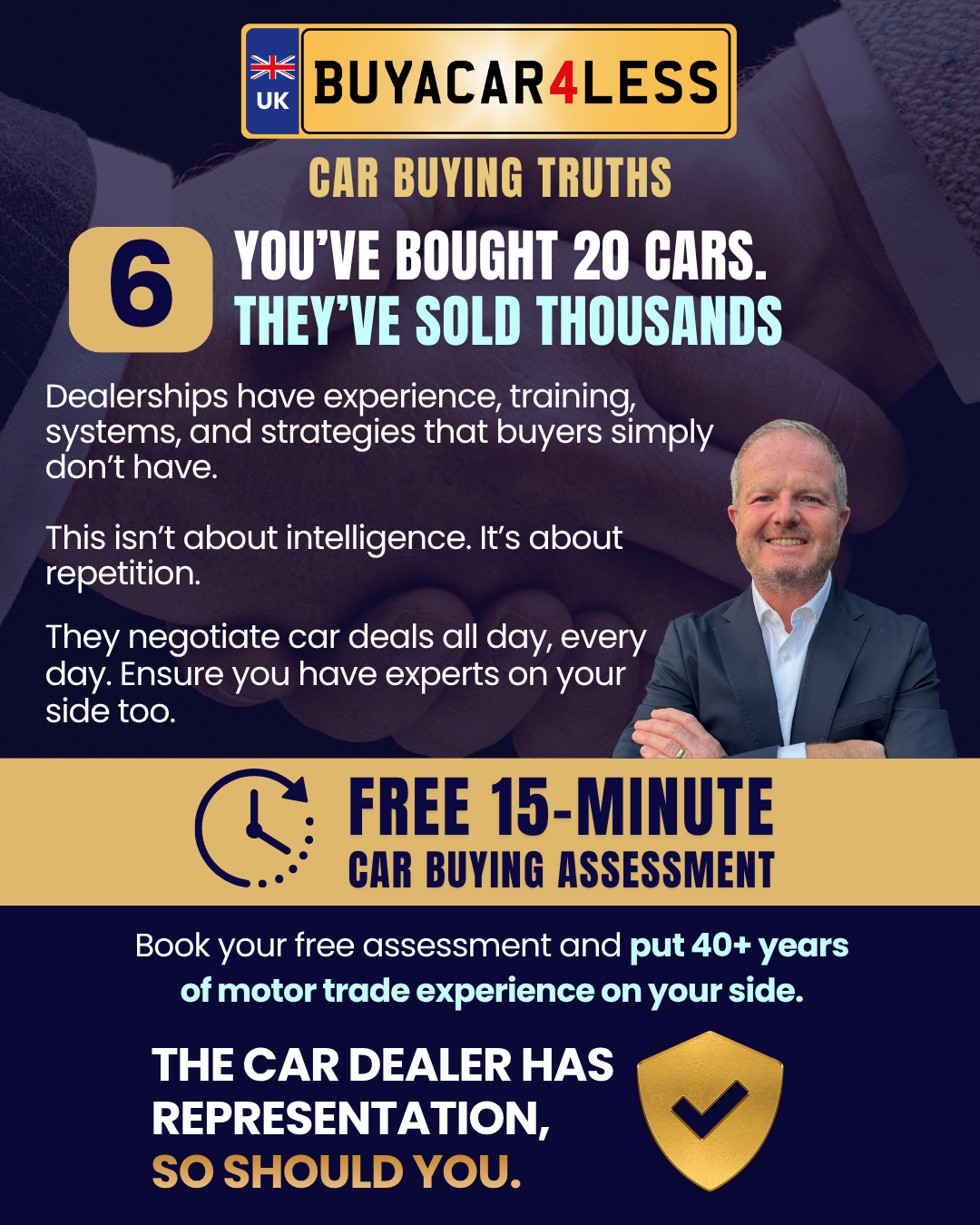
CAR BUYING TRUTH #6 — You’ve Bought 20 Cars… They’ve Sold 2,000
You’ve Bought 20 Cars… They’ve Sold 2,000
Think about how many cars you’ve bought in your lifetime… now think about how many the dealership sales team has sold this month.
Even experienced car buyers who have purchased dozens of vehicles over the years are at an inherent structural disadvantage when sitting in a showroom. Whether you are paying cash, setting up PCP or HP finance, trading in a used vehicle, or renewing an existing agreement, you are negotiating against full-time industry professionals.
The Experience Gap Explained
A typical consumer buys or leases a car once every 3 to 4 years. By contrast, a dealership sales team conducts hundreds of transactions every single month:
Pattern Recognition: Sales executives immediately recognize customer types—from busy professionals in a hurry to anxious buyers who hate haggling—and adapt their sales strategy accordingly.
Structure Control: Dealerships manage multiple transaction variables simultaneously (vehicle discount, finance APR, deposit contributions, trade-in valuations, and add-on products).
Systematic Training: Dealership staff undergo continuous training on objection handling, deal structuring, and margin retention.
Leveling the Playing Field
You don't need 40 years of motor-trade experience to get a great deal—you simply need independent, professional representation on your side of the desk to verify that every figure is fair.
Put an Industry Veteran in Your Corner
Bridge the experience gap before negotiating your next new or used car. Book your FREE 15-Minute Car Buying Assessment today.
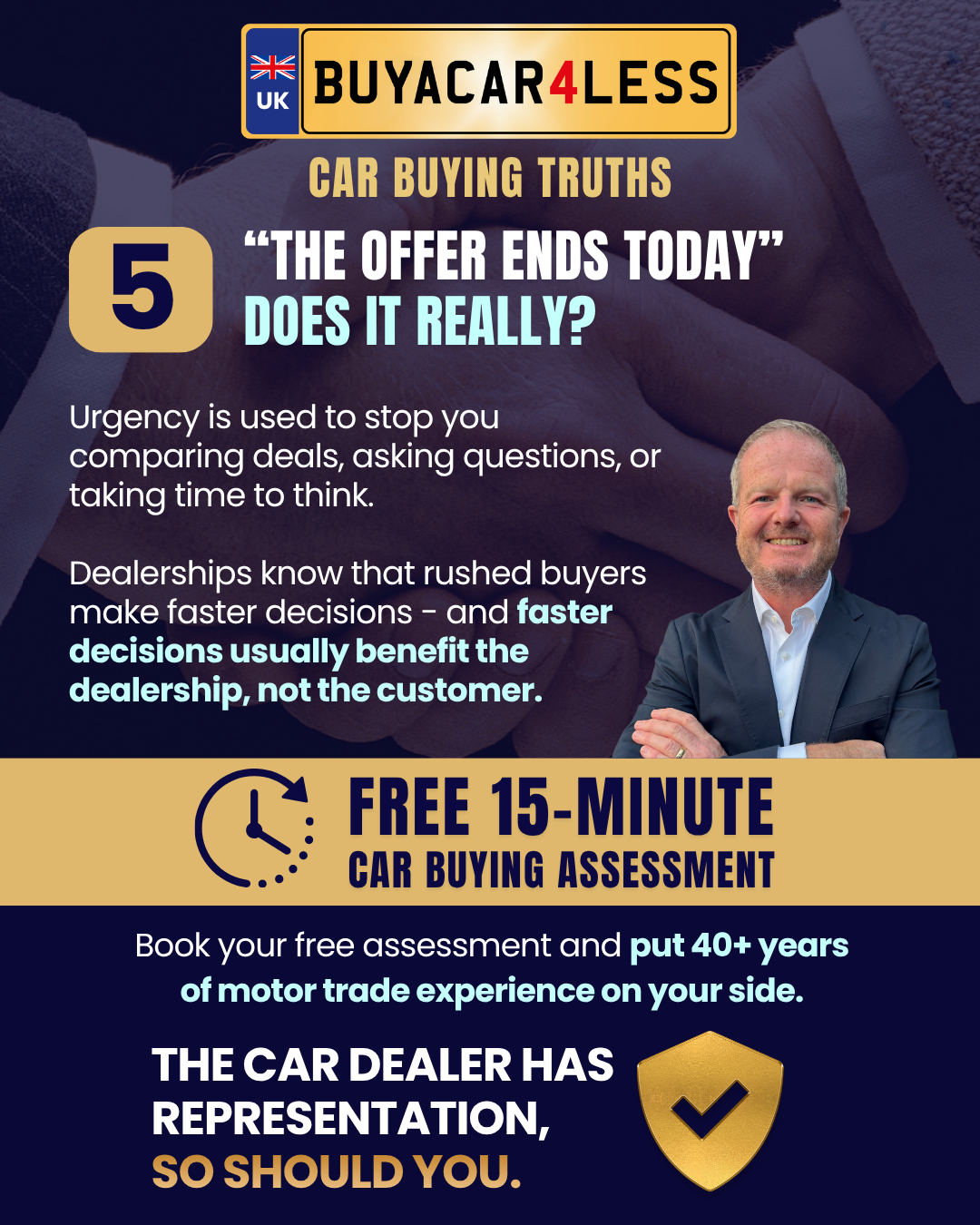
CAR BUYING TRUTH #5 — “This Offer Ends Today.” Does It Really?
“This Offer Ends Today.” Does It Really?
Has a car salesperson ever told you, "If you sign today, I can lock in this price—but tomorrow this discount disappears"?
Artificial urgency is one of the oldest tactics in retail automotive sales. Whether you are shopping for a new car release, buying a used vehicle, or looking to trade in your part-exchange, high-pressure urgency is used to shorten your decision window.
Why Dealerships Create Urgency
When you search for car sale events, VIP event discounts, or best weekend car offers, showrooms use deadline-driven language for specific reasons:
To Prevent Shop-Around: If you take your quote sheet to a competing dealership, another business can easily audit the numbers and beat them. Urgency stops you from seeking a second opinion.
To Protect Sales Targets: Showroom bonuses are often calculated on monthly or quarterly registration targets. "End of the month" urgency is real for the dealer's target, but rarely means the car price itself will jump up tomorrow.
Impact on Busy Buyers: For time-poor shoppers who dislike haggling, "today-only" messaging pressures them into closing the deal quickly rather than reviewing the contract details at home.
The Trade Insider Reality
Subsidised finance rates and manufacturer deposit support are updated quarterly or monthly by manufacturers, not daily. A legitimate discount offered today will almost certainly be available tomorrow—or replaced by an equivalent promotion.
Slow Down and Protect Your Money
Never let sales pressure force a rushed decision. Book your FREE 15-Minute Car Buying Assessment to review your deal calmly with an independent expert.
CAR BUYING TRUTH #4 — £399 Per Month… But What Does the Car Really Cost?
£399 Per Month… But What Does the Car Really Cost?
Have you ever seen a sleek car advertised at £399 per month and thought, "That fits my monthly budget perfectly"?
Focusing strictly on a monthly payment is the easiest way to lose track of what a vehicle actually costs. Whether you are arranging PCP finance, setting up an HP agreement, or entering a contract renewal, monthly payment figures are designed to mask total financial liability.
How Monthly Payments Distort Reality
When a salesperson asks, "What monthly payment are you looking to hit?", they are shifting your attention away from vehicle pricing and total interest costs:
PCP Deals: Monthly payments are kept artificially low by pushing a large proportion of the debt into a final balloon payment (Guaranteed Minimum Future Value). You might pay £399/month, but end up with an option to pay £15,000 at the end just to keep the car.
HP Finance: To hit a target monthly budget on an HP loan, dealers may extend the finance term from 36 or 48 months out to 60 or 72 months. While the monthly figure drops, the overall interest paid over the agreement climbs significantly.
Busy Buyers & Fast Sales: For time-poor buyers, a low monthly payment seems like a quick solution. Without looking at the total amount payable, you risk overpaying for the car overall.
What You Should Look at Instead
Always ask for the Total Amount Payable. This single figure includes your deposit, every monthly payment, the final balloon/option fee, and all interest charges combined.
Decode Your Finance Proposal
Is your monthly quote hiding total costs? Book your FREE 15-Minute Car Buying Assessment and let an industry expert audit your finance breakdown.
CAR BUYING TRUTH #3 — Did You Really Get Extra Part-Exchange Money?
Has a car dealer ever told you, "Good news—I managed to get my manager to put another £1,000 on your part-exchange"?
When selling your car as a trade-in against a new or used vehicle purchase, getting a higher valuation feels like a win. However, in 40 years inside the motor trade, I’ve seen this exact scenario play out thousands of times: it’s often sales theatre, not genuine value.
The Mechanics of "Over-Allowances"
Dealerships understand psychology. Buyers searching for best trade-in valuations or how to sell my car for top price are emotionally tied to the value of their current vehicle. To satisfy that emotion, dealers use a tactic called an "over-allowance."
Here is how it works across different transaction types:
PCP & HP Deals: A dealer increases your trade-in allowance by £1,000, but quietly reduces the dealer deposit contribution on your new finance package by the exact same £1,000. Your monthly payment stays identical.
Cash Purchases: The dealer raises your part-exchange valuation by £500, but simultaneously removes an equivalent £500 cash discount off the retail price of the car you are buying.
PCP Renewals: When handing back a car at contract end, dealers may offer to "pay off your settlement shortfall" as a bonus, while hiding that cost inside the higher purchase price of your next car.
Focus on the "Cost to Change"
Inside the trade, we never judge a transaction by the part-exchange price alone. The only number that matters is your Cost to Change—the total difference between what you are buying and what you are receiving for your trade-in, including all finance interest and fees.
Get a True Valuation
Don't fall for manipulated trade-in figures. Book your FREE 15-Minute Car Buying Assessment and let an expert evaluate your true cost to change.
CAR BUYING TRUTH #2 — “Let Me Speak to My Manager”
“Let Me Speak to My Manager”
You know that moment when the salesperson walks off to "speak to the manager"? Ever wondered what actually happens behind those glass office walls?
Whether you are shopping for a new car deal, negotiating a used car trade-in, arranging HP/PCP finance, or looking to sell your car to a dealership, this moment happens in almost every transaction. Most buyers assume the salesperson is in that room fighting on their behalf for a bigger discount.
Inside the motor trade, we know the truth: It’s not a mystery—it’s a structured sales tactic.
The Mechanics of the "Manager Walk"
The moment a salesperson leaves your desk, they enter a controlled environment where the sales manager evaluates your buyer profile:
PCP & HP Finance Shoppers: The manager checks how much margin is left in the deal and decides whether giving a small "manager discount" can be offset by keeping deposit support at a minimum.
Cash Buyers & Direct Sales: For cash deals, the manager determines how low they can drop the vehicle price without destroying the profit margin, often checking if they can claw back revenue on part-exchange valuations.
Part-Exchange & Car Sellers: If you are trading in a vehicle, the manager looks at wholesale auction values to see how little they can offer you while making it look like they increased your trade-in allowance.
Busy Buyers & Haggling-Averse Customers: If you're pressed for time or visibly uncomfortable, this delay is used deliberately to make you feel like significant effort was made, encouraging you to sign and end the process.
What You Should Do Instead
Recognize that the salesperson and sales manager work for the same business with the same profit targets. Instead of letting them control the pace, set firm boundaries: "I have 15 minutes left, so please bring back your absolute best out-of-the-door figure, including all fees."
Avoid Showroom Mind Games
You don't have to navigate dealership tactics alone. Book your FREE 15-Minute Car Buying Assessment and let an independent 40-year industry expert handle the numbers for you.
CAR BUYING TRUTH #1 — Is the First Offer Really the Best Offer?
Is the First Offer Really the Best Offer?
Have you ever accepted a car deal… and later wondered what you weren’t shown?
Most buyers—whether paying cash, setting up HP or PCP finance, trading in a used car, or renewing an existing agreement—assume the first quote printed on that glossy proposal sheet is the best the dealership can do.
Inside the motor trade, we know a simple reality: the first offer is almost never the best offer—it’s simply the version the dealership wants you to accept.
How the First Deal is Built Across Different Buyers
Under FCA rules, dealerships cannot manually mark up interest rates to earn extra commission. However, sales managers still hold multiple financial levers to protect dealership profit:
PCP & HP Buyers: Initial proposals often omit available manufacturer deposit contributions or dealer subsidies, keeping your monthly payment higher while preserving the dealer's profit margin.
Cash Buyers: Because dealerships make zero finance commission on cash transactions, their first quote frequently includes minimal vehicle discounts or a lower trade-in valuation to recoup lost margin elsewhere.
PCP / Contract Renewals: Returning customers are often assumed to be "easy sales." Dealers rely on your brand loyalty, offering standard renewal terms rather than top-tier discounts or maximum equity for your part-exchange.
Busy Buyers & Haggling-Averse Shoppers: If you hate negotiating with salespeople, initial quotes are tailored to test your limit, assuming you will sign quickly to avoid a long conversation.
The Motor-Trade Insider Perspective
Behind showroom doors, sales managers construct deal proposals around quarterly volume targets, finance commissions, manufacturer bonuses, and part-exchange profit margins. The first sheet you see is designed to test your baseline. Buyers are rarely shown alternative structures—such as higher deposit support or better vehicle price discounts—unless they push back with authority.
What You Should Do Instead
Never sign off on initial figures. Ask for an itemized breakdown showing the vehicle cash price, dealer deposit contributions, part-exchange value, and total cost to change.
Take Control of Your Next Car Purchase
Don't leave your money on the negotiation table. Book your FREE 15-Minute Car Buying Assessment today and let a 40-year motor trade insider review your quote before you sign.
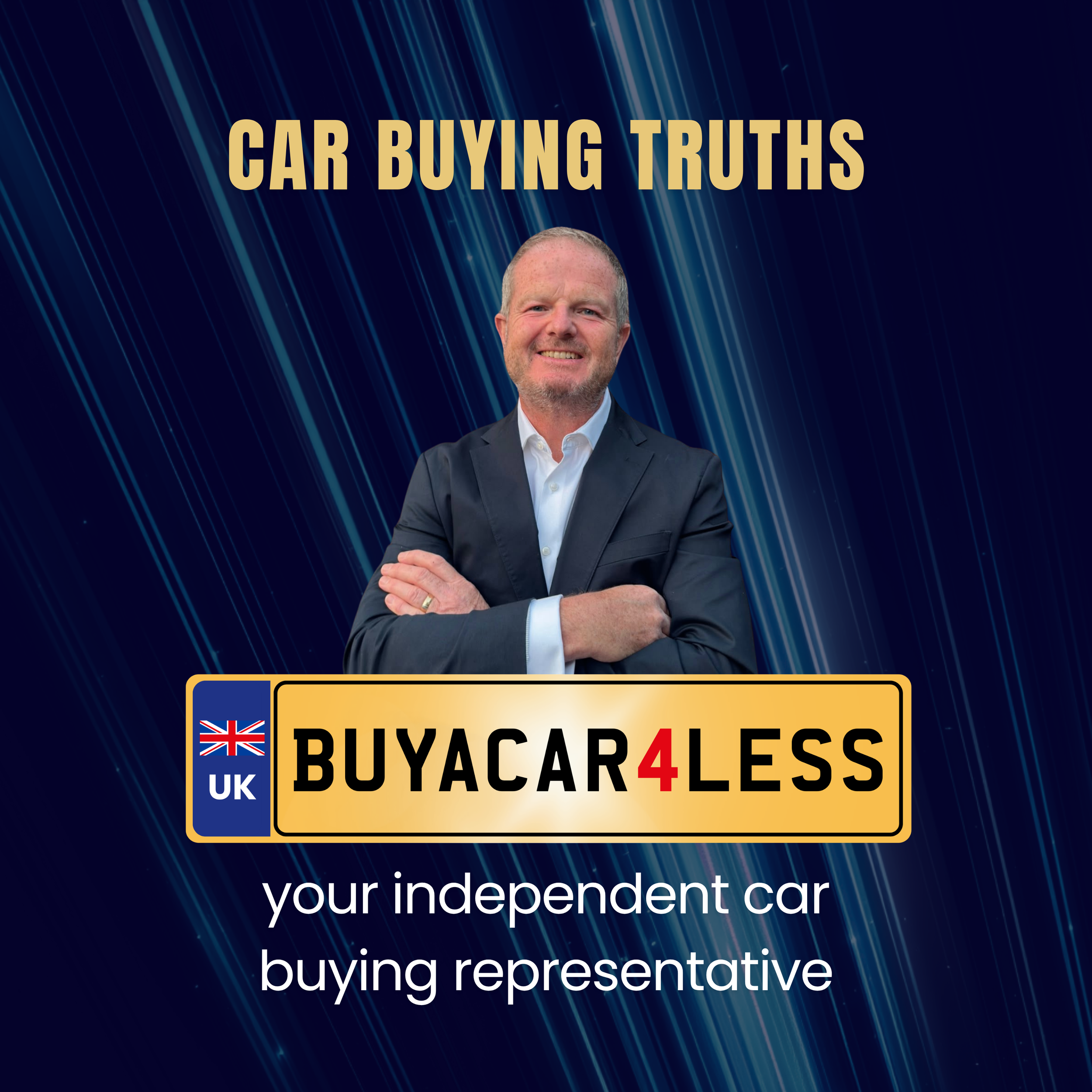
CAR BUYING TRUTHS — Welcome to Your Insider Advantage in the Motor Trade
Welcome to Car Buying Truths — Why I’m Putting 40 Years of Motor Trade Experience on YOUR Side of the Desk
Have you ever driven off a dealership forecourt with a new car… only to feel a lingering doubt in your stomach about whether you really got a good deal?
If so, you aren't alone. Buying a vehicle is typically the second-largest financial commitment a household makes. Yet, for millions of buyers, stepping into a showroom feels like entering a minefield of high-pressure sales tactics, confusing finance jargon, and shifting numbers.
My name is Colin, and after spending 40 years on the dealership side of the desk, I created Car Buying Truths to change that equation entirely.
Why I Created This Service: Leveling a Unfair Playing Field
Over four decades in the motor trade, I’ve structured thousands of deals. I’ve trained sales teams, managed sales managers, and seen every tactic, lever, and formula used to maximize dealership profitability.
Here is the hard reality: The retail car industry is designed by professionals, for profit.
When you step into a showroom, you are going up against a coordinated, highly trained team system. Sales Executives, Sales Managers, and Business Managers negotiate every day of their working lives. The average consumer, by contrast, buys or leases a vehicle once every three or four years.
That inherent experience gap often leads buyers to overpay—whether through miscalculated finance structures, undervalued trade-ins, or unnecessary add-ons.
I created this service to level the playing field. My goal isn't to make dealerships the enemy; it’s to give buyers total clarity, complete transparency, and total peace of mind so they never overpay again.
Why I Created the "16 Car Buying Truths" Series
I developed the 16-part Car Buying Truths blog library as a free insider guide to pull back the curtain on how deals are actually built.
I wanted to create short, sharp, and practical advice that resonates with every type of buyer and seller:
Cash Buyers: Who assume cash grants massive discounts, unaware that dealers lose out on finance commissions and try to recoup margins elsewhere.
PCP & HP Finance Shoppers: Who get trapped focusing solely on low monthly payments without seeing the total amount payable or compound interest fees.
PCP Renewal Customers: Who rely on brand loyalty, unaware that conquest target discounts are often reserved for new customers.
Trade-In & Car Sellers: Who get distracted by inflated part-exchange figures while their overall cost to change quietly rises.
Busy Professionals & Haggling-Averse Buyers: Who simply hate negotiating with salespeople and want a fast, fair, and stress-free transaction.
Each "Truth" in this series breaks down a specific showroom reality—from the classic "Let me speak to my manager" pause, to the crucial legal difference between FCA-regulated insurance policies and unregulated maintenance contracts.
Knowing the Insider Track—and Making It Work for YOU
Understanding the motor trade from the inside means knowing where the flexibility lies and how to unlock real value. I know how quarterly volume targets work, how manufacturer deposit support is allocated, and how to audit a deal sheet down to the penny.
When you work with an independent expert who understands the insider track:
You eliminate showroom stress: No haggling, no pressure, and no hidden surprises.
You save significant money: By optimizing vehicle price, finance structure, deposit support, and trade-in values simultaneously.
You buy with total confidence: Knowing every document, contract term, and fee has been verified by someone who spent 40 years building them.
Take Control of Your Next Car Purchase
You don't have to navigate the motor trade alone. Whether you're browsing for your next new or used car, evaluating a PCP renewal, or looking to trade in your current vehicle, I am here to ensure your hard-earned money stays where it belongs: in your pocket.
Explore the Car Buying Truths series across the blog, and when you're ready to review your next deal, let’s talk.
Get Total Peace of Mind on Your Next Car
Don't sign a dealership proposal until an insider checks the numbers. Book your FREE 15-Minute Car Buying Assessment today and let a 40-year industry expert audit your quote.